Review: Autumn Thankful Grateful and Blessed Tee
As an embroidery designer who spends more time staring at digitized paths than I do sleeping, I have learned to look past the glossy mockups. When a new design lands on my desk, I do not just see pixels; I see thread tension, fabric pull, and the eventual reaction of a customer holding the finished product. Recently, I evaluated the Autumn Thankful Grateful and Blessed Tee, a graphic that promises to capture the essence of the harvest season. My goal was not merely to admire the aesthetic but to determine if this asset holds up under the needle in real-world commercial and personal projects.
First Impressions and Visual Mood
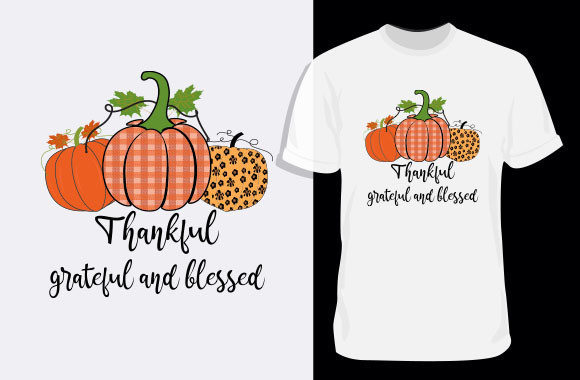
The initial appeal of the Autumn Thankful Grateful and Blessed Tee lies in its typographic warmth. It avoids the cluttered, overly complex motifs that often plague seasonal graphics, opting instead for a clean, legible layout. The mood is unmistakably cozy, evoking images of crisp air, pumpkin spice, and family gatherings. For a designer, this clarity is crucial. Complex gradients in digital art often translate poorly into thread, but this design’s strong lines suggest it was created with stitchability in mind.
When I opened the provided files, including the Print-ready PNG with Transparent Background and the editable AI and EPS files compatible with Adobe Illustrator CS6, I looked immediately for potential trouble spots. Tiny serifs or excessively thin lines can break during stitching or get lost in textured fabrics. This design appears robust enough to handle standard embroidery techniques without requiring excessive micro-management during the digitizing phase.
Real-World Application: Beyond the T-Shirt
While the product title specifies it as a T-shirt design, limiting this graphic to cotton tees would be a missed opportunity for any craft business owner or Etsy seller. I visualized this design on a heavy-weight canvas tote bag. The phrase "Thankful, Grateful, and Blessed" resonates deeply with buyers looking for meaningful, everyday items. On a tote, the design would serve as a statement piece, likely requiring a larger hoop size to maintain proportion and impact.
I also considered its application on sweatshirt embroidery. A crewneck sweatshirt provides a stable, thick fabric base that supports higher stitch density without puckering. Here, the design could act as a central chest motif or a smaller left-chest emblem for a more subtle, boutique feel. For baby embroidery, such as on a onesie or a soft blanket, the sentiment fits perfectly for holiday gifts or nursery decor. However, scaling down for infant garments requires careful attention to detail loss. If the text becomes too small, the individual letters may merge, ruining the readability that makes the design effective.
Another viable avenue is the embroidered patch. Patches are trending in modern apparel decoration, allowing for removable customization. Using the SVG or AI file, one could easily create a cut-file for a satin stitch border, turning this graphic into a versatile accessory that can be ironed onto jackets, caps, or bags. This versatility increases the perceived value of the digital embroidery file, making it a smarter investment for small shop products.
Technical Considerations for Stitching
Before running this design on a client’s garment, practical due diligence is non-negotiable. Since the product description mentions PNG, AI, EPS, and SVG formats, it is implied that this is primarily a graphic asset that may require digitizing into a machine embroidery design format (such as PES, DST, or JEF) unless specific embroidery files are included in the full package. If you are digitizing this yourself from the vector files, pay close attention to stitch density.
For text-based designs like Autumn Thankful Grateful and Blessed Tee, a combination of satin stitch for smaller elements and fill stitch for larger background shapes (if any are added) works best. Avoid overly dense fill stitches on stretchy fabrics like jersey knits, as this can cause the garment to warp. Always use a proper stabilizer—cut-away for stretchy fabrics and tear-away for stable wovens—to ensure the finished product remains flat and professional.
Thread color selection plays a pivotal role in the final outcome. While autumnal oranges, browns, and deep reds are obvious choices, do not underestimate the power of contrast. Testing the design in black and white mockups can reveal if the lettering stands out sufficiently against the background fabric. On dark fabrics, lighter thread colors will pop, but ensure the stitch coverage is dense enough to prevent the fabric color from showing through.
Navigating Potential Pitfalls
There are scenarios where this design requires caution. Curved surfaces, such as caps or hats, present a challenge for wide textual layouts. If you plan to embroider this on a cap, you may need to arch the text or significantly reduce the width to fit within the standard cap frame without distortion. Additionally, textured fabrics like terry cloth or heavy fleece can swallow fine details. If the design includes delicate flourishes, they may get lost in the pile of the fabric. In such cases, increasing the stitch count slightly or using a thicker thread weight might help maintain visibility.
Washability is another critical factor for commercial embroidery projects. Items like kitchen towels or aprons undergo frequent washing and high heat. Ensure that the thread colors chosen are colorfast and that the stitching is secure. A loose thread end can unravel after a few cycles, diminishing the quality of the handmade product and potentially damaging customer trust.
Value for Craft Entrepreneurs
For Etsy sellers and creative entrepreneurs, the Autumn Thankful Grateful and Blessed Tee offers more than just a pretty picture; it offers a narrative. Customers are not just buying a shirt; they are buying a feeling of gratitude and seasonal joy. This emotional connection drives buyer engagement and allows for higher price points on personalized gifts and custom apparel.
Using the editable AI and EPS files, you can customize colors to match specific brand palettes or create variations for different holidays. This flexibility is essential for maintaining brand consistency across your small shop product line. Furthermore, having access to print-ready PNGs allows for the creation of high-quality printable mockups for your online listings, giving customers a realistic preview of the finished product before they purchase.
Final Verdict and Designer Notes
In my evaluation, the Autumn Thankful Grateful and Blessed Tee stands out as a versatile and emotionally resonant asset. It bridges the gap between simple typography and seasonal thematic design effectively. However, success depends on execution. Do not assume the graphic files are ready-to-stitch embroidery files unless explicitly stated. Verify the license terms for commercial use, especially if you plan to sell finished items or digital derivatives.
- Test on scrap fabric: Always run a test stitch-out to check for registration issues and thread breaks.
- Check hoop size: Ensure your machine’s hoop can accommodate the design dimensions, especially for larger applications like tote bags.
- Contrast is key: Select thread colors that provide sufficient contrast against the fabric texture and color.
- Stabilize properly: Match your stabilizer to the fabric type to prevent puckering and shifting.
- Verify file formats: Confirm you have the correct embroidery file format for your specific machine if not digitizing manually.
Ultimately, this design is a strong contender for your autumn collection. Whether used for holiday embroidery, boutique branding, or heartfelt personalized gifts, it carries the professional polish and sentimental weight that modern consumers seek. By approaching it with a designer’s eye for detail and a crafter’s respect for materials, you can transform this digital asset into a tangible, high-value finished product.