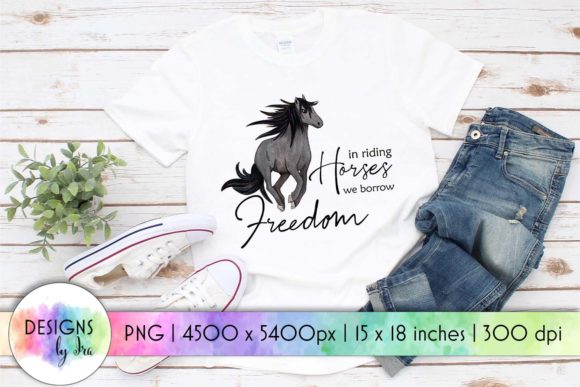
Reviewing the In Riding Horses We Borrow Freedom Print
As a designer who spends half my life digitizing and the other half stitching, I have learned to look past the glossy mockups. When I first opened the In Riding Horses We Borrow Freedom Print, I was not just looking for a pretty picture. I was looking for viability. Could this graphic translate into thread? Would it hold up on a textured towel or a stretchy sweatshirt? For embroidery designers, small business owners, and Etsy sellers, the difference between a digital file that sells and one that sits unused often comes down to these practical realities.
This review evaluates the design from the perspective of real-world application. We are moving beyond the screen to discuss how this asset performs in the hoop, on the fabric, and in the hands of a customer.
First Impressions: Mood and Visual Personality
The immediate impact of the In Riding Horses We Borrow Freedom Print is its emotional resonance. The quote is evocative, tapping into a sense of liberation that appeals strongly to equestrians and nature lovers. Visually, the layout balances the organic shape of the horse with the structured typography of the text. For an embroidery project, this balance is crucial. If the text were too ornate or the horse too detailed, the stitch count would skyrocket, and the clarity would suffer on smaller items.
The high-resolution PNG format, provided at 300 dpi with a transparent background, offers a clean starting point. However, as embroidery professionals know, a PNG is a raster image, not a vector or a native embroidery file. This means the designer or digitizer must interpret the lines into stitches. The clean edges in the source graphic suggest that converting this into a machine embroidery design should be straightforward, allowing for crisp satin stitches on the lettering and well-defined fill stitches on the horse silhouette.
Real-World Application: From Digital Asset to Finished Product
To truly test the value of any graphics asset, I imagine it on actual products. I recently considered this design for a custom embroidered tote bag. Tote bags are popular craft business items, but they present challenges due to their woven texture. The bold lines of the horse in the In Riding Horses We Borrow Freedom Print would stand out nicely against canvas, provided the digitization accounts for the fabric weave. A light stabilizer would be essential to prevent puckering, ensuring the finished product looks professional rather than homemade.
Another strong candidate for this design is sweatshirt embroidery. Hoodies and crewnecks are staples for boutique branding. The positive quote fits the cozy, inspirational vibe many customers seek in personalized gifts. Here, the scale matters. At 15 x 18 inches, the source image is large enough to be scaled down for a left-chest logo or enlarged for a full-back statement piece. For a sweatshirt, I would recommend using a cut-away stabilizer to support the weight of the thread, especially if using dense fill stitches for the horse body.
For baby embroidery, caution is required. While the theme is gentle, the size and complexity might be too much for a tiny onesie. However, it could work beautifully on a nursery decor item, such as a pillow cover or a blanket border. In these cases, the softness of the thread colors becomes paramount. Pastel threads on a minky fabric could transform the design into a soothing heirloom piece.
Navigating Technical Challenges and Fabric Constraints
Not every surface is friendly to complex designs. When evaluating the In Riding Horses We Borrow Freedom Print for curved surfaces like caps or hats, I see potential pitfalls. The curvature of a cap distorts flat designs. The text, in particular, needs to be arched or carefully digitized to follow the panel’s shape. Without proper adjustment, the letters may appear warped after stitching. Additionally, the stiff buckram inside a cap requires a different approach to stitch density than a soft t-shirt.
Thin fabrics present another hurdle. If you plan to use this on a kitchen towel or a lightweight tea towel, the stitch density must be managed carefully. Too many overlapping stitches can cause the fabric to pucker or tear. In such cases, considering an applique design approach might be smarter. You could stitch the outline of the horse, place a piece of contrasting fabric underneath, and then stitch over it. This reduces bulk and adds a charming, textured look that appeals to handmade product buyers.
Dark fabrics require strategic thread color choices. The transparency of the PNG allows you to preview the design on different backgrounds. Always test your thread colors against the fabric. A dark navy shirt might need bright white or silver thread to ensure the quote is readable. Contrast is key to customer trust; if they cannot read the message from a few feet away, the design fails its purpose.
Enhancing Brand Consistency and Customer Engagement
For Etsy sellers and creative entrepreneurs, consistency builds brand recognition. The In Riding Horses We Borrow Freedom Print offers a versatile aesthetic that can fit into various collections. Whether you are selling holiday embroidery items or year-round custom apparel, this design adds a touch of elegance and sentiment. It elevates a simple t-shirt into a meaningful statement piece.
Using this graphic in your printable mockups can significantly boost buyer engagement. High-quality previews help customers visualize the final product. Since you receive a high-resolution file, you can create realistic digital embroidery file previews without needing to stitch every sample first. This efficiency is vital for small shop owners who need to manage their time effectively.
Practical Notes for the Embroidery Designer
Before you commit to production, take these steps to ensure quality:
- Test on Scrap Fabric: Never stitch directly on your final garment. Use a similar scrap piece to check tension and registration.
- Check Stitch Density: If you are digitizing this from the PNG, monitor your stitch count. High density can make the item stiff and uncomfortable.
- Verify Licensing: The product description mentions you can use it for multiple purposes, but always confirm the specific license terms for commercial embroidery. Ensure you have the right to sell finished items featuring this design.
- Inspect Small Details: Zoom in on the horse’s legs and the thinner parts of the font. These areas may need running stitch outlines instead of satin stitches to maintain clarity.
- Compare Light and Dark Backgrounds: Create mockups for both scenarios to offer customers variety.
In conclusion, the In Riding Horses We Borrow Freedom Print is a strong contender for your design library. It bridges the gap between artistic expression and commercial viability. With careful digitization and thoughtful fabric selection, it can become a standout item in your craft business. Whether for a personalized gift or a boutique product, this design invites creativity and demands precision. Treat it with the respect it deserves, and it will reward you with beautiful, stitched results.