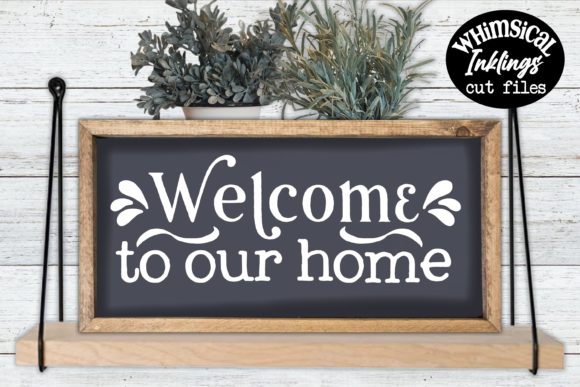
Welcome to Our Home: A Designer’s Embroidery Review
As a designer who spends more time staring at stitch simulations than I care to admit, I have learned that not every graphic translates well into thread. Some designs look stunning on a screen but turn into a tangled mess of bobbin thread and frustration once they hit the fabric. That is why I approach new Illustrations and Graphics with a healthy dose of skepticism until I see how they perform in the hoop. Recently, I evaluated the Welcome to Our Home design, and I want to share my practical insights for fellow embroidery designers, Etsy sellers, and craft entrepreneurs.
First Impressions: Mood and Visual Personality
The phrase "Welcome to Our Home" carries an inherent warmth. It is inviting, domestic, and universally understood. When I first loaded this design into my software, I was looking for clarity. Does the typography hold up? Is the layout balanced? For a quote intended for a welcome sign, frame, or product printing, the visual weight needs to be just right. It cannot be so delicate that it gets lost in the fabric texture, nor so heavy that it stiffens the garment entirely.
This particular design strikes a commendable balance. It feels approachable rather than overly ornate. The layout suggests a modern farmhouse or contemporary craft aesthetic, which is currently dominating the handmade market. For those of us creating design assets for small shops, this versatility is crucial. It does not scream for attention; instead, it whispers hospitality. This subtle confidence makes it an excellent candidate for products where the sentiment matters as much as the decoration.
Real-World Application: From Screen to Stitch
To truly test Welcome to Our Home, I moved beyond digital mockups and considered its application in real-life scenarios. I imagined stitching this onto a neutral linen tote bag design for a housewarming gift. The result? Fantastic. The linear nature of the text allows for clean running stitch outlines or crisp satin stitch lettering, depending on the size. If you are aiming for a boutique look, a satin finish adds a premium sheen that elevates the perceived value of the handmade product.
I also visualized this on a cozy fleece sweatshirt. Here, the context changes. Sweatshirt embroidery requires careful attention to stitch density. If the design is too dense, the fabric will pucker, and the wearer will feel a stiff, cardboard-like patch on their chest. Because this design is primarily typographic, it offers flexibility. You can adjust the density settings in your software to ensure the threads sink slightly into the fleece without overwhelming it. This adaptability makes it a strong contender for custom apparel lines.
Another viable option is baby embroidery on a muslin swaddle or a nursery pillow cover. In these instances, softness is paramount. Using a lighter weight thread and reducing the stitch count can make the design gentle enough for sensitive skin. It transforms from a simple graphic into a cherished personalized gift that parents will keep for years.
Navigating Technical Challenges
While Welcome to Our Home is versatile, it is not without its technical demands. As an experienced reviewer, I must highlight where caution is needed. If you plan to use this on curved surfaces, such as caps or hats, you must be mindful of distortion. Text stretches differently than images. A slight arch in the design might be necessary to compensate for the curvature of the cap brim. Without this adjustment, the letters may appear to sag or warp once stitched.
Fabric choice is another critical variable. On textured fabrics like terry cloth towels or rough canvas, fine details can disappear. If you are stitching this on a kitchen towel for holiday embroidery gifts, ensure your thread colors contrast sharply with the background. A dark navy on white works; a light gray on beige does not. Furthermore, when working with stretchy fabrics like jersey knits, a proper stabilizer is non-negotiable. Without it, the tension of the stitches will cause the fabric to gather, ruining the clean lines of the text.
Small hoop sizes present another challenge. If you are shrinking this design to fit a 4x4 hoop for an embroidered patch, legibility becomes the primary concern. Tiny serifs or intricate connections between letters may merge into a blob of thread. I recommend running a test stitch on scrap fabric before committing to your final product. Check the smallest details. Can you distinguish the letters? If not, simplify the design or increase the size.
Enhancing Brand Value and Customer Trust
For Etsy sellers and craft business owners, consistency is key to building brand trust. A sloppy stitch-out reflects poorly on your professionalism. Conversely, a crisp, well-executed Welcome to Our Home design signals quality. It tells the customer that you care about the finished product. This attention to detail can justify a higher price point and encourage repeat business.
When creating printable mockup previews for your online store, ensure the digital representation matches the physical reality. Use high-quality photos that show the texture of the thread. Highlight the dimensionality of the stitches. This transparency helps manage customer expectations and reduces return rates. Whether you are selling digital embroidery file packages or finished goods, presenting the design accurately builds credibility.
Practical Notes for the Embroidery Designer
Before you launch into production with this machine embroidery design, take a moment to review these practical steps:
- Test on Scrap Fabric: Always stitch a sample on the same material you intend to use for the final product. This reveals issues with tension, density, and registration.
- Check Thread Contrast: View your design in black and white. If the elements blend together, adjust your color palette for better visibility.
- Review Stitch Density: High density looks luxurious but can cause puckering. Find the sweet spot for your specific fabric type.
- Confirm Hoop Size: Ensure the design fits comfortably within your hoop with adequate margin for stabilization.
- Inspect Small Details: Zoom in on the digitized file. Look for redundant stitches or jumps that can be trimmed for efficiency.
- Licensing Verification: Since these images come to you as graphics, confirm the license terms. Are you allowed to sell finished items? Can you use it for commercial projects? Always clarify this before listing products.
In conclusion, Welcome to Our Home is a solid addition to any designer’s library. It offers the flexibility needed for diverse applications, from commercial embroidery runs to one-off personalized gifts. By respecting the technical limitations of thread and fabric, you can transform this simple graphic into a standout piece that resonates with customers. Grab it, test it, and start creating something beautiful for you and your family to enjoy.