Proud Mama of a Graduate: A Designer’s Review
As an embroidery designer who has spent countless hours digitizing and stitching everything from delicate baby monograms to bold corporate logos, I approach every new machine embroidery design with a critical eye. It is not just about whether the image looks good on a screen; it is about how it translates to thread, how it behaves on fabric, and ultimately, how it resonates with the end customer. Recently, I evaluated Proud Mama of a Graduate, a graphic asset positioned within the Print Templates and Graphics categories, to determine its viability for real-world embroidery projects. While the product description highlights its utility for t-shirt graphics, my focus was strictly on its potential as a stitched element for custom apparel and handmade goods.
First Impressions and Visual Personality
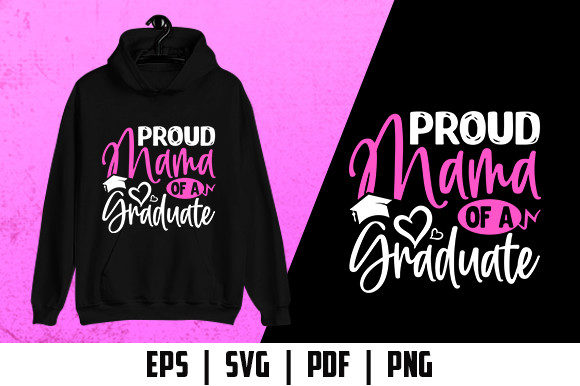
The initial appeal of Proud Mama of a Graduate lies in its emotional clarity. Graduation season is a high-volume period for crafters and Etsy sellers, and designs that capture the specific pride of a mother are always in demand. The layout appears clean and centered, which is crucial for embroidery. In my experience, overly complex layouts with scattered elements often lead to registration issues or excessive jump stitches. This design seems to prioritize a cohesive central motif, which suggests it would stitch out cleanly without requiring advanced hoop management skills.
The mood is celebratory yet dignified. It avoids the cluttered aesthetic that plagues many low-quality digital embroidery files. For a designer, this simplicity is a virtue. It allows the texture of the thread to shine rather than getting lost in microscopic details that machines struggle to replicate. When I visualize this on a sweatshirt embroidery project, I see a design that sits comfortably on the chest or back, offering a professional finish that elevates the perceived value of the finished product.
Real-World Application: The Custom Tote Scenario
To truly test the versatility of Proud Mama of a Graduate, I imagined a specific client request: a custom canvas tote bag for a graduation party gift. Canvas is a sturdy fabric, but it has a distinct weave that can interfere with fine details. If this design relies heavily on tiny text or intricate running stitch outlines, it might get lost in the fabric texture. However, if the design utilizes bold shapes and adequate stitch density, it will pop beautifully against the neutral background of a tote.
In this scenario, the design serves as the focal point. I would pair it with high-contrast thread colors—perhaps a deep navy or burgundy on a natural canvas—to ensure readability. The fact that the product includes SVG and PNG files suggests that the original artwork is vector-based or high-resolution raster, which is excellent for scaling. Before digitizing or purchasing a converted embroidery file, I would check the scale. A design that looks perfect on a t-shirt might be too large for a standard 5x7 hoop used for smaller accessories. This is where the reviewer’s eye for proportion becomes essential. For a tote, a larger hoop size is preferable, allowing the design to breathe and maintain its impact.
Navigating Fabric and Hoop Constraints
One must consider where Proud Mama of a Graduate should be used carefully. Embroidery is not one-size-fits-all. If you are planning to stitch this on a cap or a curved surface, the design’s width becomes a critical factor. Wide designs can cause puckering on curved hats if not properly stabilized. Similarly, if the design includes fine lettering, stitching it on a stretchy fabric like a jersey t-shirt requires a robust cut-away stabilizer to prevent distortion over time.
I also advise caution with dark fabrics. If the design relies on light-colored threads for detail, you may need to use an underlay or even an applique design technique to ensure the colors remain vibrant. A solid fill stitch background can sometimes add unnecessary bulk, so checking if the design uses open spaces effectively is key. For thin fabrics, such as silk or lightweight cotton, a dense design could pull the material, creating an unsightly pucker. In these cases, testing on scrap fabric is non-negotiable.
Commercial Viability for Small Shops
For small shop product creators and craft business owners, the commercial potential of Proud Mama of a Graduate is significant. Graduation gifts are emotional purchases, and buyers are willing to pay a premium for personalized, high-quality items. Whether it is a personalized gift like a pillow cover or a holiday embroidery piece for a spring celebration, the design’s theme is evergreen in its niche.
However, professionalism is paramount. Using a design that stitches out cleanly builds customer trust. If the embroidery project results in broken threads, bird nests, or unclear shapes, it reflects poorly on your brand. Therefore, understanding the technical specs is vital. Since the product description lists PDF, EPS, SVG, and PNG files, it is important to note that these are graphic formats, not native machine embroidery formats like PES or DST. You will need to digitize these graphics or convert them using reliable software. This step allows you to control the satin stitch widths and fill stitch directions, ensuring the final output matches your quality standards.
Practical Designer Notes for Best Results
- Test on Scrap Fabric: Always run a test stitch-out on the same type of fabric you intend to use for the final product. This reveals issues with tension and density.
- Check Thread Contrast: Use a color chart to select threads that offer sufficient contrast against your fabric. Poor contrast can make even the best design look muddy.
- Review Stitch Density: If you are digitizing from the provided SVG, ensure the density is appropriate for the fabric weight. Too dense, and it stiffens the garment; too sparse, and the fabric shows through.
- Confirm Hoop Size: Measure the design dimensions against your available hoops. Do not attempt to squeeze a large design into a small hoop by resizing it excessively, as this distorts the stitch proportions.
- Inspect Small Details: Zoom in on the digital file. Are there tiny elements that might break during stitching? Simplify if necessary.
- Verify Licensing: Before selling custom apparel or embroidered patches featuring this design, confirm the license terms. Ensure you have commercial rights to use the graphic for physical products.
Enhancing Visual Appeal and Brand Consistency
Ultimately, Proud Mama of a Graduate is more than just a pattern; it is a tool for storytelling. When executed well, it enhances the visual appeal of your handmade product. It signals to the buyer that thought and care went into the creation. For apparel decorators, this means consistent branding. If your shop specializes in family-centric milestones, this design fits seamlessly into your portfolio.
Using printable mockup tools can help you preview how the design will look on different items before you stitch a single thread. This saves time and materials. Additionally, considering the design’s adaptability for baby embroidery or adult apparel expands your market reach. A design that works on a onesie for a younger sibling celebrating their graduate brother or sister adds a layer of familial connection that customers love.
In conclusion, while Proud Mama of a Graduate is marketed as a graphic for t-shirts, its potential in the embroidery world is substantial for those willing to put in the technical prep work. By respecting the constraints of fabric, hoop size, and stitch technology, you can transform this digital asset into a tangible, cherished keepsake. For the serious creative entrepreneur, it represents an opportunity to deliver high-quality, emotionally resonant products that stand out in a crowded marketplace. Just remember to verify the technical details, test thoroughly, and stitch with precision.